

Fall Event Design Trends We're Loving Across Texas Right Now

Fall is one of the busiest seasons for events in Texas, and for good reason. The weather becomes slightly less aggressive, which in Texas counts as a win, people settle back into their routines after summer, and calendars quickly fill with corporate events, nonprofit galas, mitzvahs, weddings, and social celebrations.
There’s also something about fall that naturally makes events feel a little more intentional. But because it’s such a popular season, it’s also when things can start to feel repetitive. The same color palettes, the same layouts, the same overall flow.
So, how do you design a fall event that actually feels different?
From Austin and Dallas to Houston and San Antonio, we’re seeing clients move away from simply making an event look beautiful and toward creating environments that feel layered, interactive, and personal. Here are some of the fall event design ideas and trends we're loving across Texas right now.
Moving Beyond Traditional Fall Colors
Burnt orange, deep reds, warm neutrals, and earthy tones aren't going anywhere, but the way they're being used is changing. Instead of relying on a traditional fall color palette to do all the work, we're seeing color used as one layer within a much larger design.
A clean, modern foundation might be warmed up with an unexpected rust or ochre accent, while another event might skip traditional fall colors altogether and create that seasonal feeling through materials, florals, lighting, and texture. Unexpected color combinations can also make a fall event feel fresh without losing that sense of warmth.
The goal isn't necessarily for guests to walk into the room and immediately think "fall." It's to create an environment that feels appropriate for the season while still feeling specific to the event, the client, and the space.

Texture Is Doing the Heavy Lifting
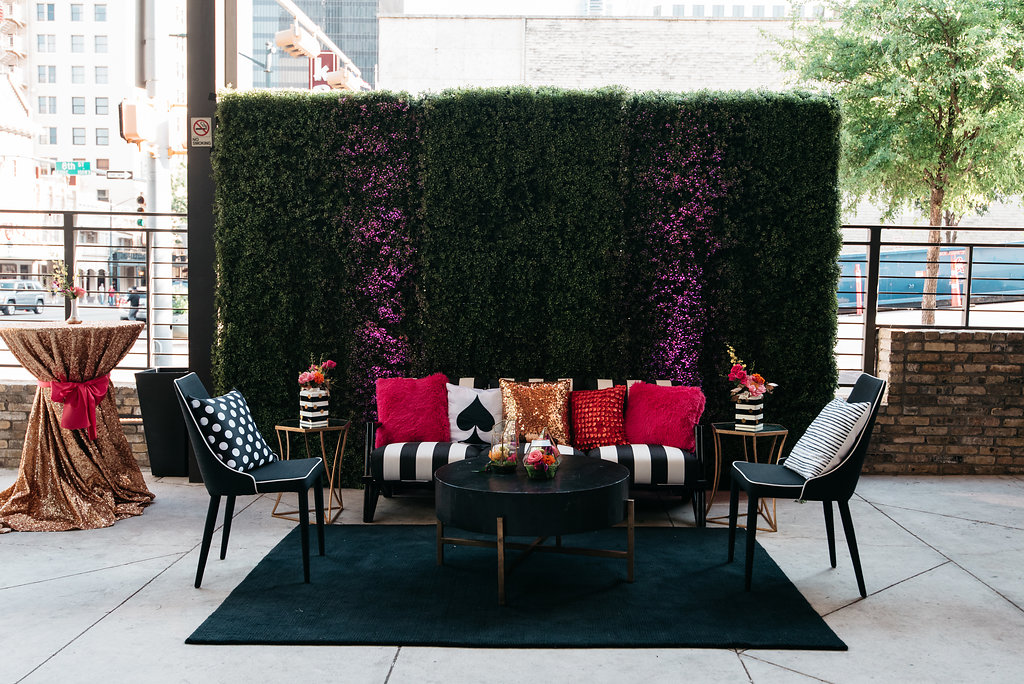
If there’s one thing defining fall event design right now, it’s texture. Wood, stone, layered linens, velvet, mixed metals, soft seating, natural materials, and interesting finishes are giving spaces more depth without requiring more "stuff."
We love this because it allows a room to feel complete without feeling overdesigned. Rather than filling every available space with décor, different materials can work together to create an environment that feels layered and intentional.
How that comes to life can look different depending on where we’re working. An Austin event might lean into natural materials and an indoor-outdoor setting, while a Dallas event could take those same ideas in a more polished direction with cleaner lines and elevated finishes. Houston lends itself beautifully to immersive environments with scale and sophistication, while San Antonio offers incredible opportunities to pair contemporary design with the city's architecture, character, and sense of place.
The style may change from city to city, but the idea is the same: texture can create warmth and visual interest without relying on an obvious seasonal theme.
Rethinking the Traditional Event Layout
Some of the biggest opportunities in event design have nothing to do with décor. They come from rethinking how guests actually experience the space.
Traditional event layouts tend to be predictable: tables, stage, dance floor, bar, repeat. There’s nothing inherently wrong with that setup, but it can make the event feel static. Instead, we're looking at ways to create smaller moments within the larger environment and give guests a reason to move throughout the space.
That might mean incorporating lounges, interactive activations, unexpected food and beverage moments, or distinct areas that reveal themselves as the event progresses. It could also mean changing the room completely from cocktail hour to dinner to the after-party rather than asking one layout to serve every part of the night.
This works especially well for corporate events, nonprofit galas, and mitzvahs where engagement matters. When the layout encourages guests to explore, interact, and discover something new, the energy of the entire event changes.

Lighting Is Becoming Part of the Design
Lighting has always been important, but we're seeing it become much more integrated into the overall event design rather than treated as something that simply makes the room look good.
Warm washes, architectural lighting, layered fixtures, pin spotting, and subtle changes throughout the evening can completely transform a venue. Lighting can draw attention to an installation, make a large ballroom feel more intimate, define different areas of an open space, or signal that the event is transitioning from dinner into a party.
In some cases, lighting can carry more of the environment than physical décor, which can also make it a smart place to invest when working within a specific event budget. A thoughtful lighting design enhances everything else in the room, from the florals and linens to the furniture, signage, and even the food.
Designing Experiences, Not Just Décor
This is probably the biggest shift we're seeing in event planning and design across Texas. Guests remember what they did and how they felt more than they remember every individual décor element.
That doesn't mean design matters less. If anything, it means design has to work harder. Instead of existing simply to be looked at, it should help create interaction and support the overall guest experience.
We’re seeing food and beverage become part of the environment, interactive activations that guests actually want to participate in, personalized details that feel specific to the audience, and spaces intentionally designed for people to connect. Even a beautiful photo moment works better when it feels like a natural part of the event rather than something that was added simply because every event is supposed to have one.
The best experiences don't feel forced. They feel like they belong there.
What This Looks Like for Mitzvahs
Mitzvahs are a perfect example of this shift. We're seeing families move away from heavy, literal themes and toward more elevated environments that still feel incredibly personal to the person being celebrated.
Instead of taking one interest and repeating it across every surface, we can use it as inspiration for the larger experience. A favorite sport, hobby, place, color, or style might influence the entertainment, activations, food, graphics, or overall energy of the room without becoming a literal theme.
There’s also the challenge of designing one celebration for very different audiences. Kids, teenagers, parents, grandparents, and family friends are all experiencing the same event, and they aren't necessarily looking for the same thing. Creating different moments within the space allows everyone to find their place while still making the event feel cohesive.
The result is less about "executing a theme" and more about creating a celebration that couldn't belong to anyone else.
Austin, Dallas, Houston, and San Antonio: Same Season, Different Energy
One of the things we love about planning events throughout Texas is that every city brings something different to the table.
Austin gives us a lot of room to be creative and slightly unconventional, whether that means experimenting with the floor plan, embracing an indoor-outdoor venue, or incorporating unexpected materials and experiences. Dallas often has a more refined energy, where creativity comes through polished execution, sophisticated details, and elevated finishes.
Houston is an incredible market for events with scale. From corporate gatherings and conferences to nonprofit galas and social celebrations, there are opportunities to create immersive environments that still feel warm and inviting. San Antonio has its own distinct character, with venues and architecture that can become part of the design rather than simply serving as a backdrop.
We don't think an event in Austin should automatically look like an event in Dallas, Houston, or San Antonio. Understanding the location, the venue, and the audience is part of what makes the design feel authentic instead of interchangeable.
Creating a Fall Event That Actually Feels Different
Fall gives us an incredible starting point, but a great fall event doesn't need pumpkins, leaves, or an entirely rust-colored room to feel connected to the season.
The events that feel most exciting right now are the ones that start with the guest experience and build the design around it. Thoughtful layouts, layered textures, intentional lighting, interactive moments, and unexpected details can create a sense of warmth and seasonality without becoming predictable.
Most importantly, the event should still feel like you.
If you're planning a fall corporate event, nonprofit gala, mitzvah, wedding, or social celebration in Austin, Dallas, Houston, or San Antonio, we'd love to help create something that feels elevated, intentional, and genuinely memorable.
David & Jordan
Big Time Creatives


